DASCA, EPeMR
Policy and Regulatory Alignment
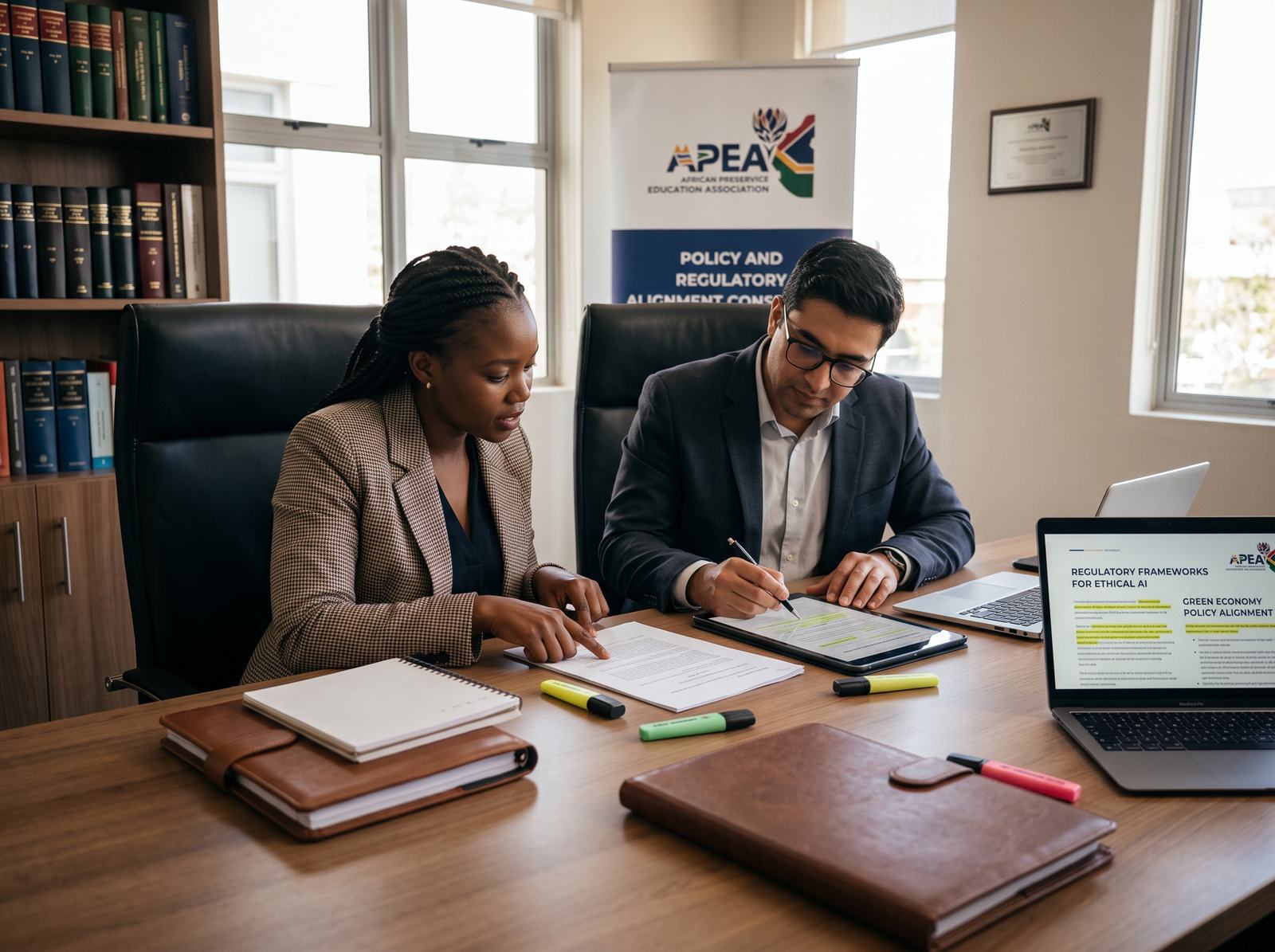
Advice on integrating Just Energy Transition and green economy goals into national curricula, and drafting regulatory and legal frameworks for ethical AI in education and skills assessment.
We work across the whole pre-professional pipeline: schools, TVET colleges, universities, apprenticeships and the first years of work.
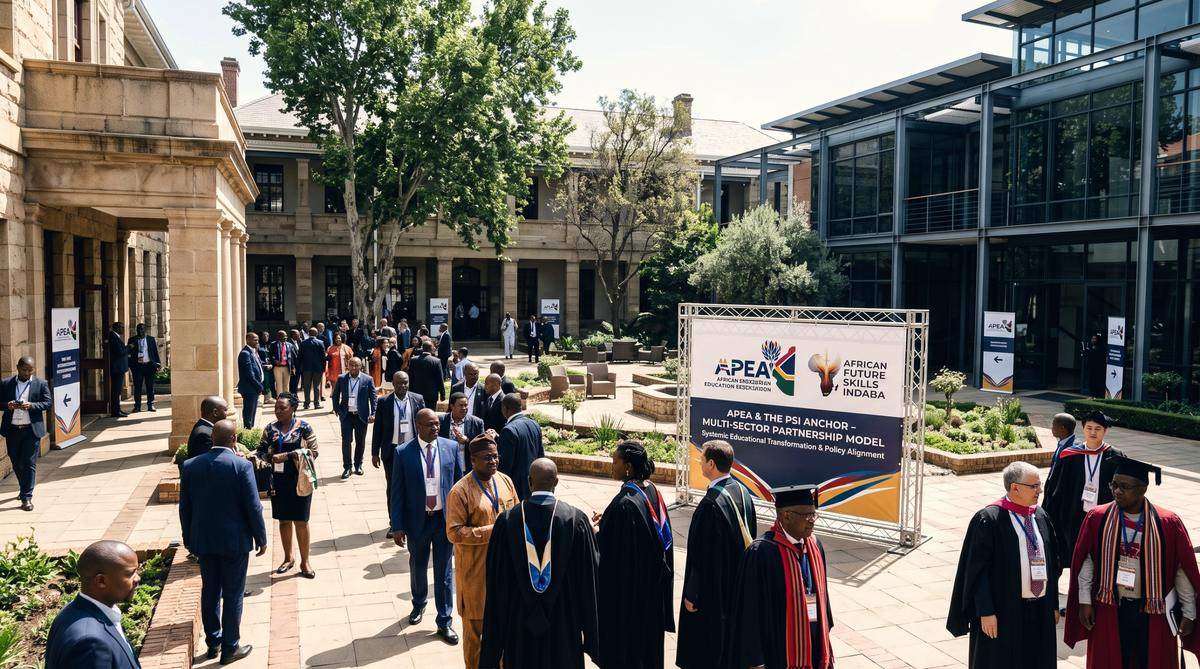
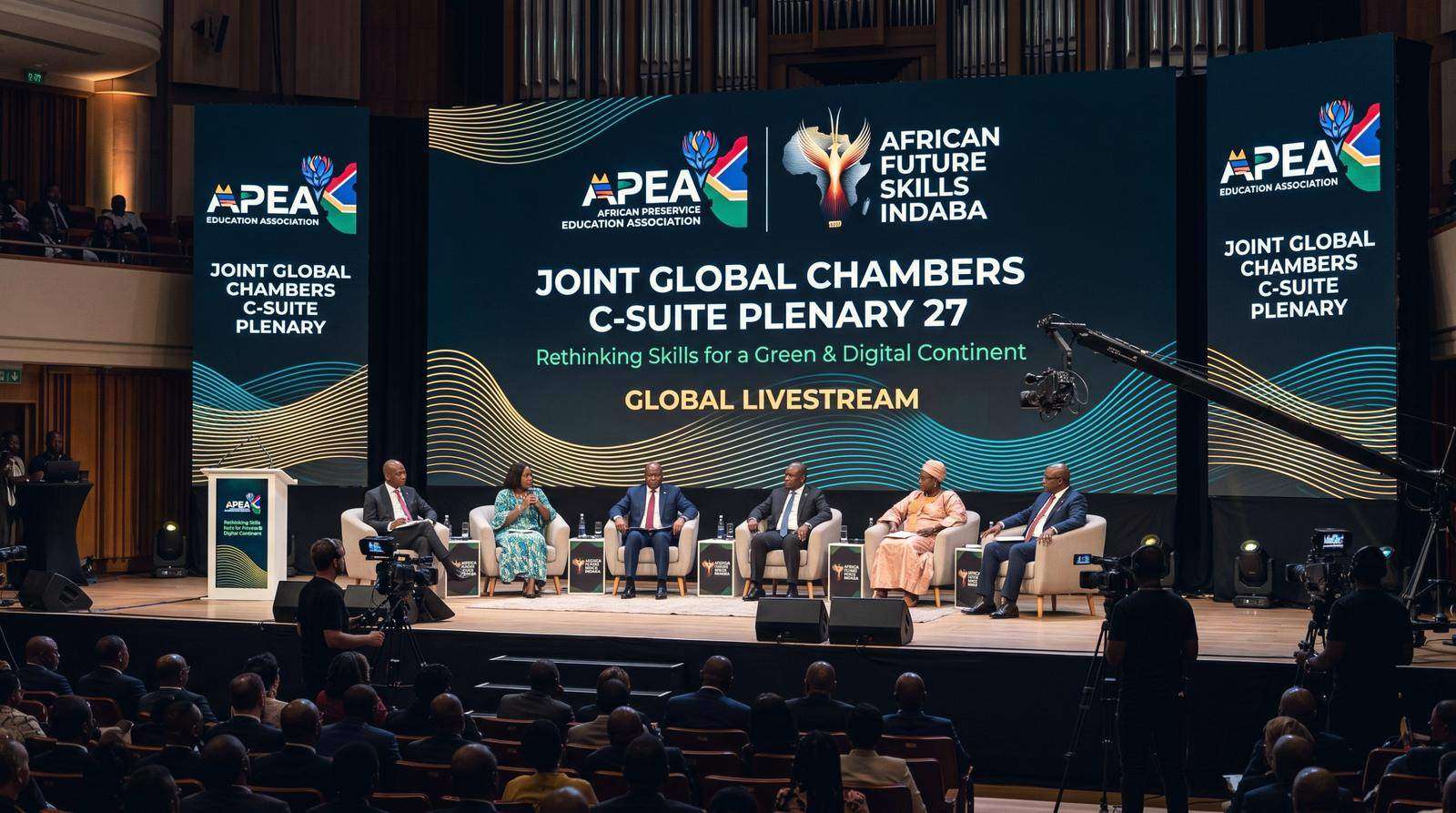
22 to 24 March 2027 at The Canvas Riversands, Johannesburg, after the youth pre-conference on 19 and 21 March. Ministers, employers, educators, investors and young people decide together how Africa prepares people for green and digital work.
Imagine a continent where millions of young people are full of potential, but outdated education systems keep them from thriving. You don't have to imagine it: the African continent lives with it.
That is why the African Preservice Education Association exists: a think tank and action hub that equips governments, educators, employers and youth with the tools, training and policies to unlock Africa's next generation of talent.
Our seven-pillar approach brings together education technology, decolonised curricula and economic alignment, closing the gap between what is taught and what tomorrow's economy needs. APEA works for whole-system change, with African education as a driver of prosperity and resilience.
The formal education and training people receive before they enter the workforce as full-time professionals, in any field.
Africa has about 344,000 direct green jobs today. Forecasts put the need at more than 3 million by 2030, across 12 sub-sectors.
Up to 1.3 million of those roles call for specialised or advanced skills. That training happens before people start work, which is where APEA works.
Energy and power make up about 70% of forecast green jobs, led by solar at up to 1.7 million. Africa produces 3% of global emissions but needs over $100bn a year in green investment.
The DRC, Ethiopia, Kenya, Nigeria and South Africa hold up to 720,000 of the 2030 jobs. Governments have strategies such as AU Agenda 2063, but often lack the local capacity to turn them into funded programmes.
Source: Forecasting Green Jobs in Africa, BCG, FSD Africa and Shortlist (2024).
To bridge the digital divide and turn infrastructure access into effective technology use in African educational institutions.
02CPSDTo address the widespread learning crisis and the foundational skills deficit rooted in colonial-era rote memorisation.
03EEESTo address high joblessness among skilled youth and create alternative career pathways for highly educated professionals in an AI-driven economy.
04DASCATo challenge educational structures and curricula that are socially irrelevant and misaligned with African needs because of persistent colonial influence.
05STEMRAITo address the 4IR and 5IR skills shortage and the gender and equity gaps in critical technology and science fields.
06ESSTo build the human capital the Just Energy Transition and climate adaptation urgently need.
07EPeMRTo close the policy and implementation gap: the failure to align educational investment with national economic output and goals such as the African Union's Agenda 2063.
Advice on integrating Just Energy Transition and green economy goals into national curricula, and drafting regulatory and legal frameworks for ethical AI in education and skills assessment.
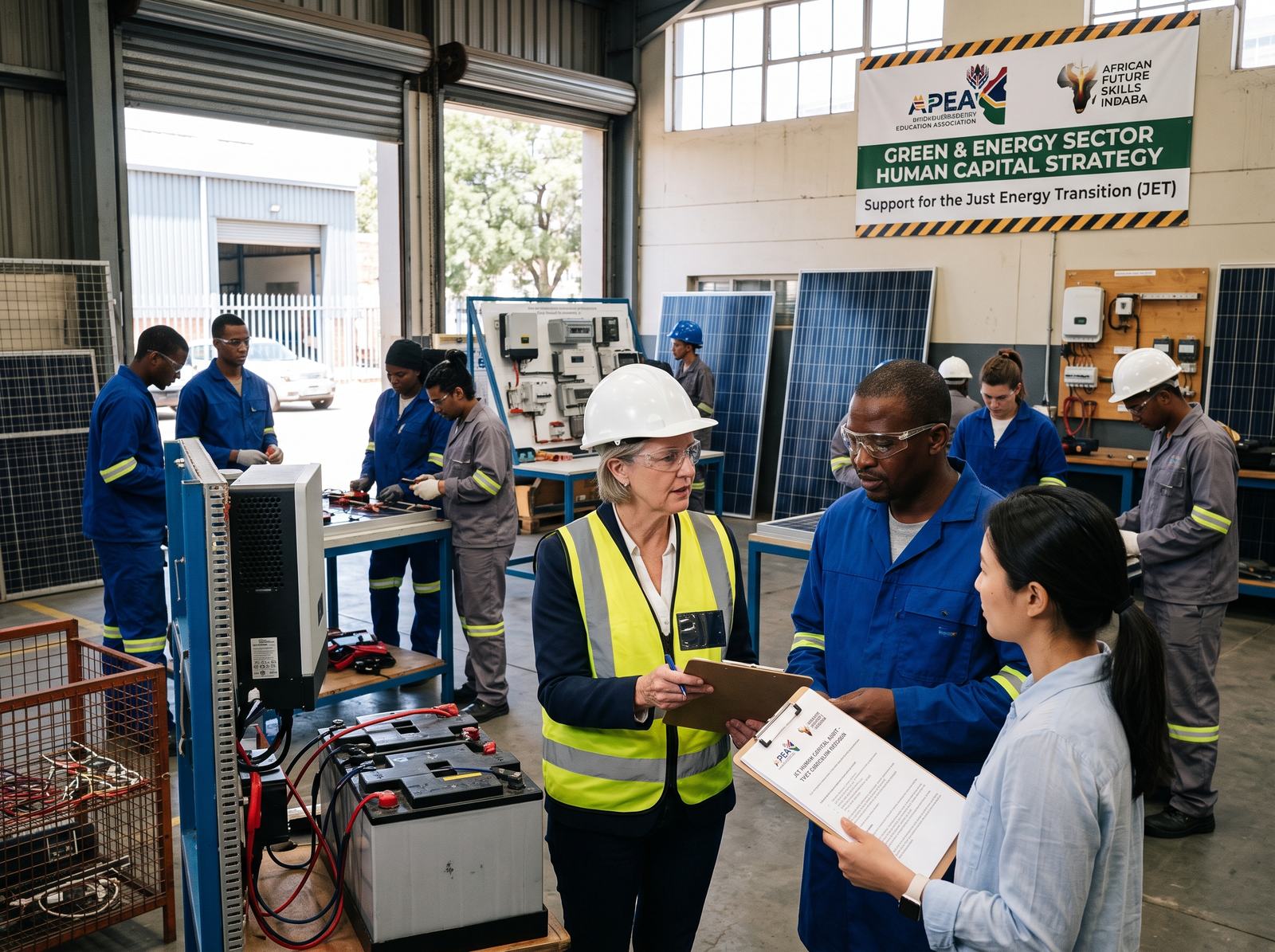
National strategies for the JET human capital pipeline, and auditing and designing energy sector skills programmes for TVET and higher education institutions.
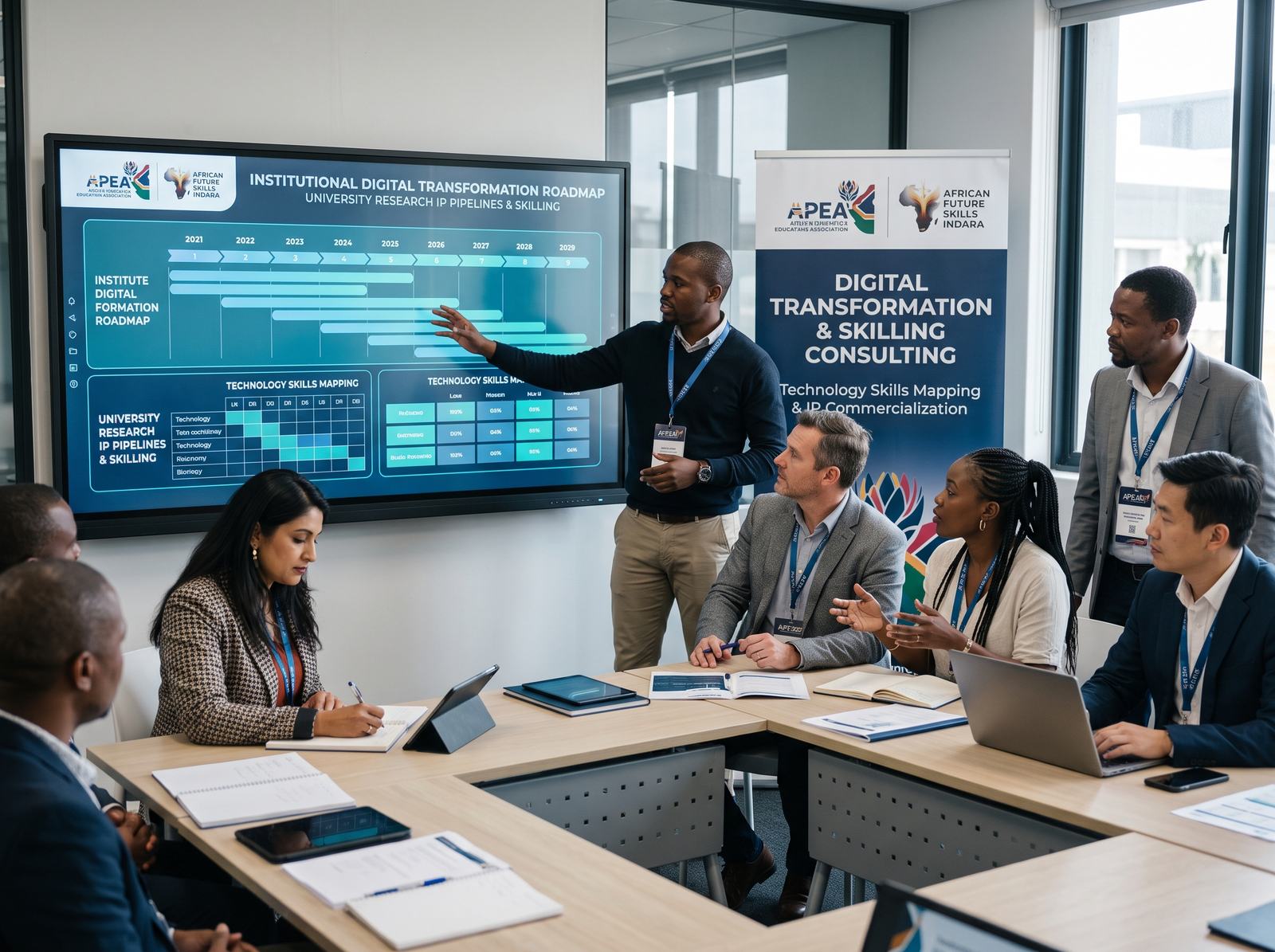
Institutional digital transformation roadmaps, technology skills mapping for companies, and commercialising university research IP for public benefit.
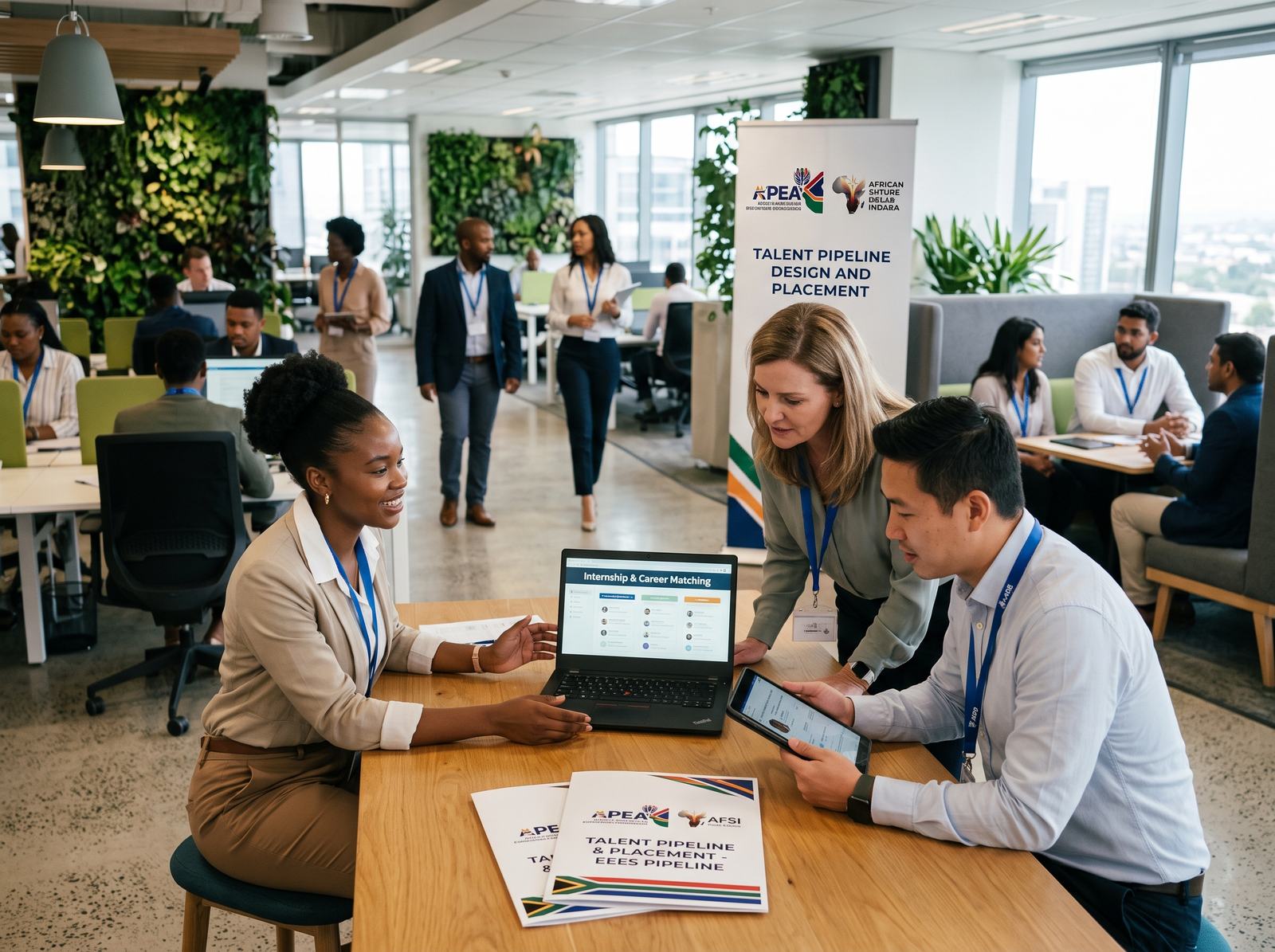
Customised youth skilling programmes, and internship matching for private sector partners looking for critically skilled talent.
As the operational arm of the Pedagogical Science Institute, APEA turns research into frameworks governments and institutions can adopt.
Technology linked with decolonised curricula, and economic development linked with climate action.
The standard we hold ourselves to with every partner, learner and government we work with.
When its Charter is signed at AFSI 2027, seven working groups, a Council and a Youth Council will take the Indaba's commitments forward year-round. Until then it is being designed with founding partners.
 African Future Skills Indaba 2027
19 to 24 March 2027 at The Canvas Riversands. Youth and schools programmes first, then three days of evidence, design and deployment with ministers, employers, investors and young people.