APEA, African Preservice Education Association
The seven pillars

Seven pillars, one system.

APEA pursues seven strategic pillars, its core programme and research framework. Each answers a systemic challenge in how Africa prepares people for work.

01
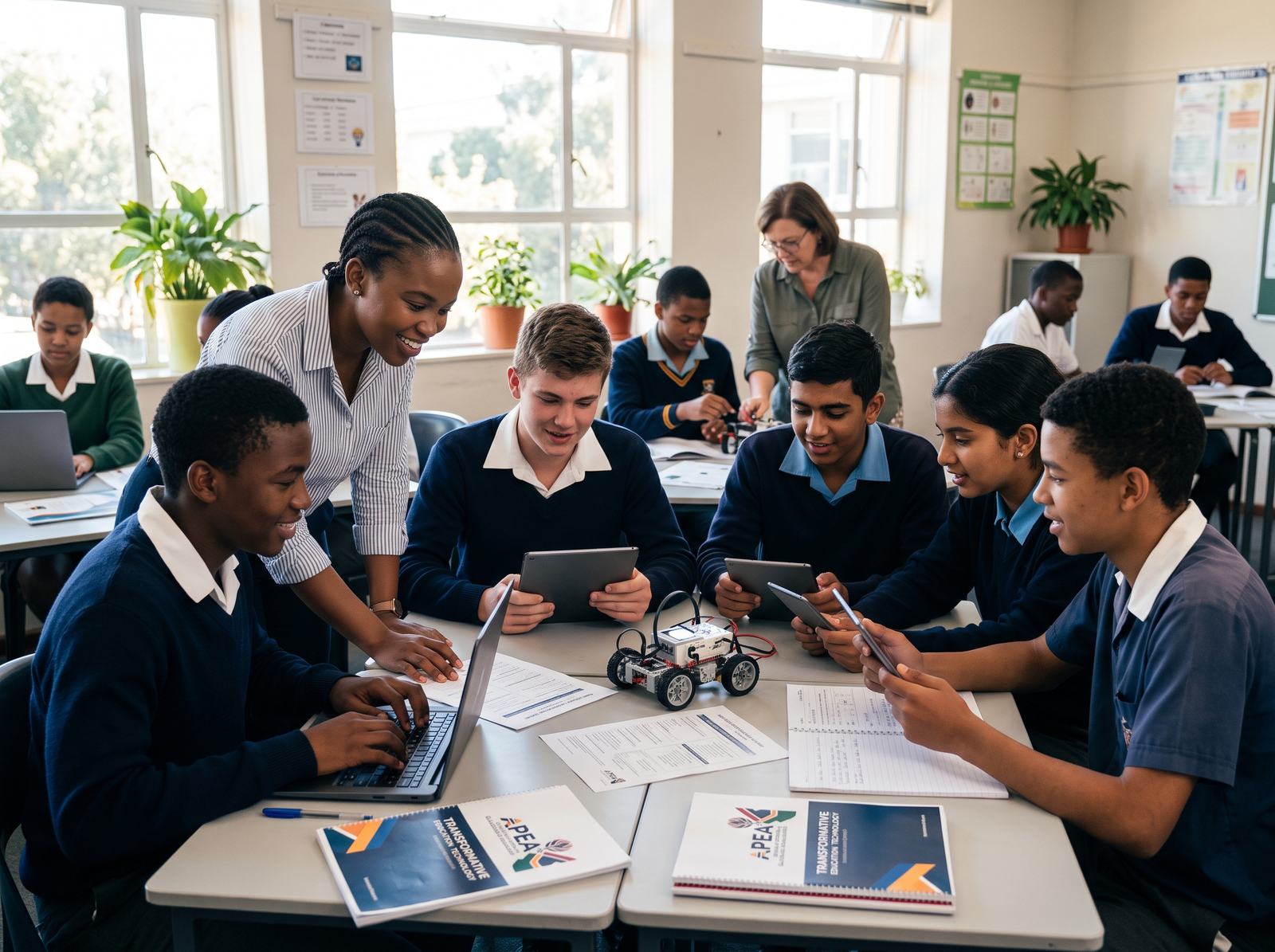
TEdTech

Transformative Education Technology

Why it exists
To bridge the digital divide and turn infrastructure access into effective technology use in African educational institutions.
What APEA does
  • Develop and publish national digital transformation roadmaps for governments and educational institutions.
  • Integrate advanced technologies, including Artificial Intelligence and Robotics, into preservice teacher training curricula.
  • Design and roll out digital literacy certification programmes that address the digital usage gap across diverse African contexts.
  • Advise on institutional EdTech strategy, the commercialisation of research-based digital tools, and technology skills mapping for companies.
Where it shows up at AFSI
Forum 3 (Digital Fluency & AI) and the Innovations Demo Theatre

02
CPSD

Critical Pedagogical Skills Development

Why it exists
To address the widespread learning crisis and the foundational skills deficit rooted in colonial-era rote memorisation.
What APEA does
  • Design and deliver accredited, high-volume micro-credentialing programmes in innovative, learner-centred teaching, critical thinking, problem-solving and socio-emotional learning.
  • Offer specialised workshop and training services to government agencies, educational institutions, NGOs and commercial entities.
  • Set standards and quality assurance frameworks for every professional development programme delivered under APEA.
Where it shows up at AFSI
Design Charrette Working Group A
03
EEES

Educator Entrepreneurship & Economic Systems

Why it exists
To address high joblessness among skilled youth and create alternative career pathways for highly educated professionals in an AI-driven economy.
What APEA does
  • Run start-up incubators for educational and social enterprise development, for educators and pre-professional youth.
  • Develop entrepreneurship curricula aligned with the green political economy and the Fourth and Fifth Industrial Revolutions.
  • Manage internship matching that connects skilled pre-professional youth to high-growth industries, including technology, energy and economic development.
  • Drive the commercialisation of APEA's intellectual property, so research and curriculum outputs fund the Association's work.
Where it shows up at AFSI
The Pathfinders Showcase, the Practice Track and Working Group B
04
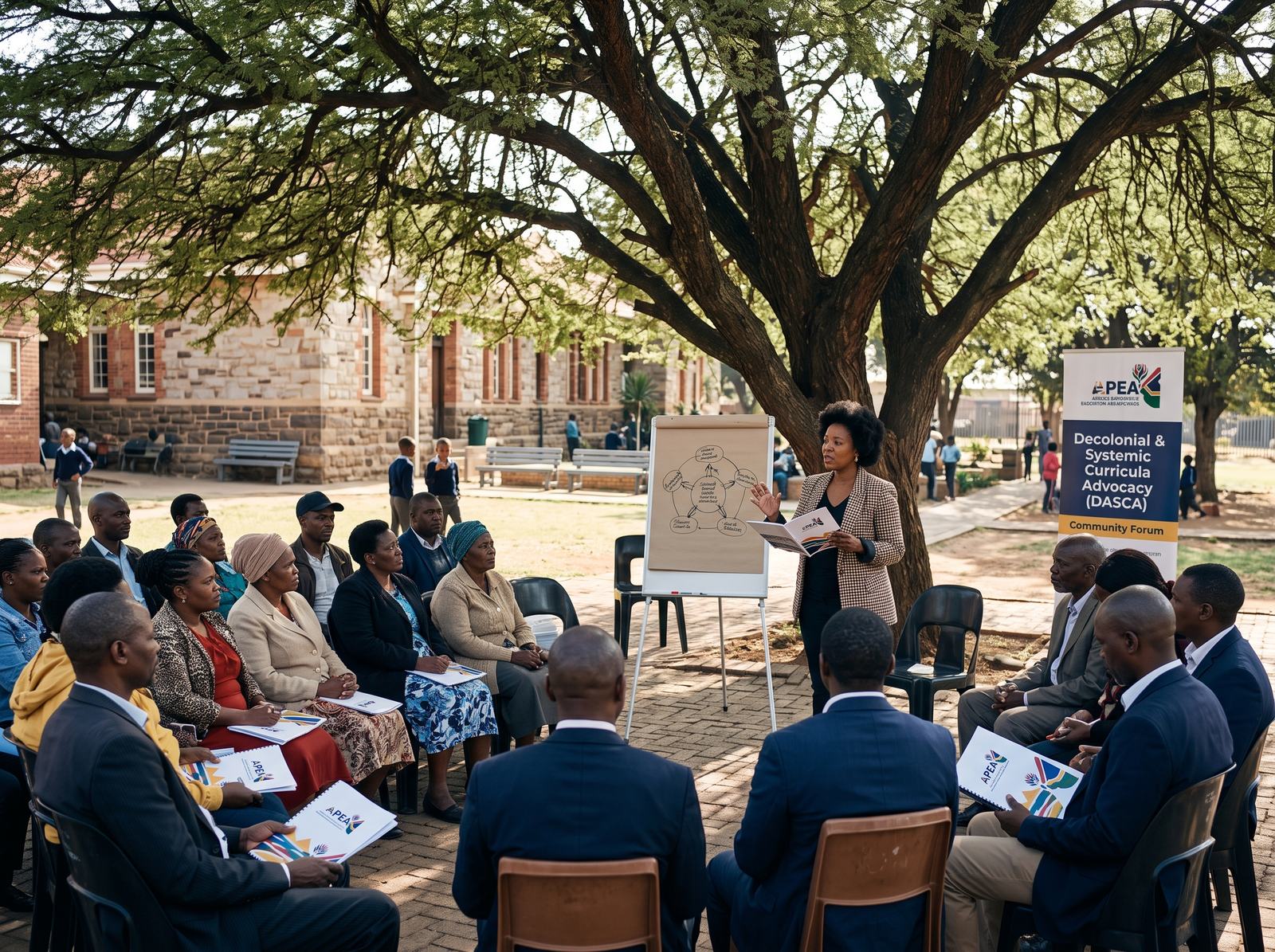
DASCA

Decolonial & Systemic Curricula Advocacy

Why it exists
To challenge educational structures and curricula that are socially irrelevant and misaligned with African needs because of persistent colonial influence.
What APEA does
  • Drive deep structural reform by challenging inequitable funding models and colonial curriculum rankings.
  • Research the legal and ethical aspects of AI in education policy, and produce evidence-based guidelines for national adoption.
  • Advocate for and draft locally relevant, decolonised curriculum frameworks for governments, educational bodies and regional organisations.
  • Research and advocate for stronger national intellectual property policy across the continent, so educational research can be commercialised.
Where it shows up at AFSI
The Evidence Hearing and the Continental Curriculum Audit
05
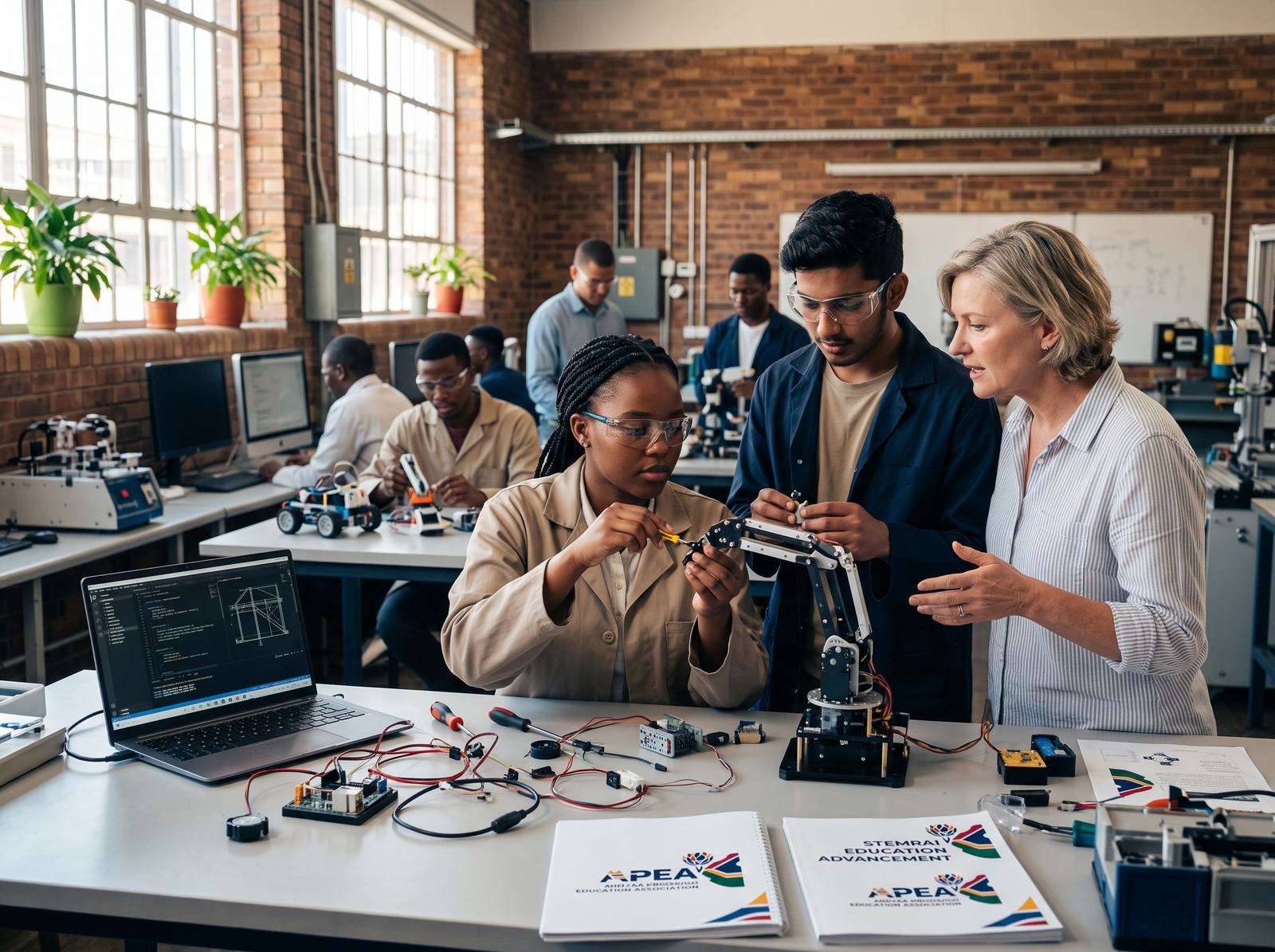
STEMRAI

STEMRAI Education Advancement

Why it exists
To address the 4IR and 5IR skills shortage and the gender and equity gaps in critical technology and science fields.
What APEA does
  • Design and deploy technology skills programmes and consortia in future skills, including AI, robotics, engineering and advanced manufacturing.
  • Develop open-access resources and run targeted outreach to promote equity and inclusion in STEMRAI careers across the continent.
  • Partner with universities, TVET institutions and industry to build a seamless STEMRAI skills pipeline for Africa's Just Energy Transition.
Where it shows up at AFSI
Forums 3 and 5, and the Youth Policy Prize
06
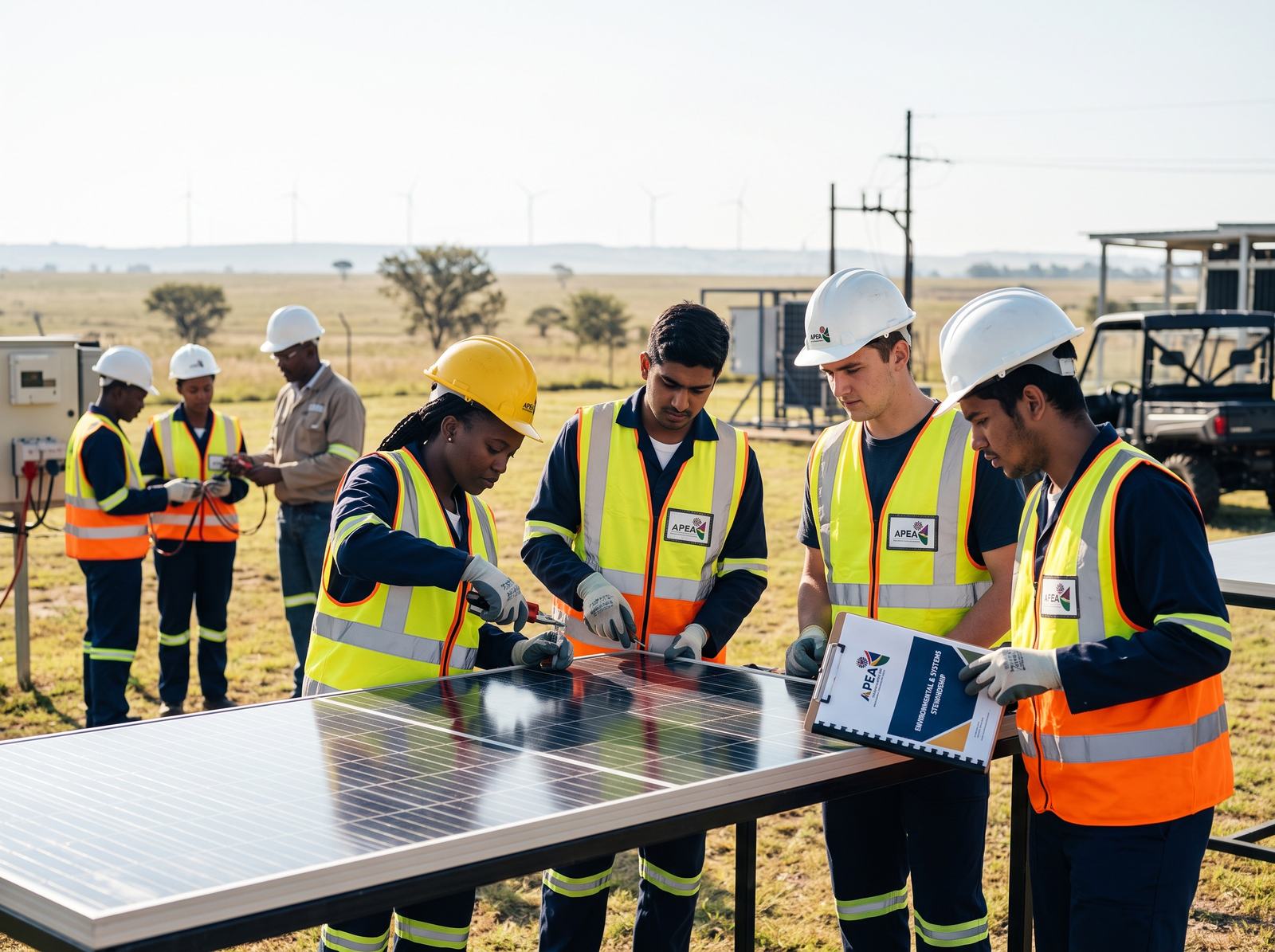
ESS

Environmental & Systems Stewardship

Why it exists
To build the human capital the Just Energy Transition and climate adaptation urgently need.
What APEA does
  • Design and deliver energy sector skills programmes and curricula focused on the green political economy and climate resilience.
  • Build climate consciousness and systems thinking in educational institutions, to grow sustainable green ventures and community environmental projects.
  • Incubate youth-led ventures in environmental sustainability and the green economy, in line with the PSI's stewardship objectives.
Where it shows up at AFSI
Forums 1 and 2, and the Green Innovator of the Year award
07
EPeMR

Education Policy for Macro-Economic Resilience

Why it exists
To close the policy and implementation gap: the failure to align educational investment with national economic output and goals such as the African Union's Agenda 2063.
What APEA does
  • Model the economic impact of educational investment and publish evidence-based policy briefs for governments and development partners.
  • Provide high-level policy advice to national governments, the African Union, regional economic communities and multilateral development partners.
  • Host major multi-sector conferences that bring policy, education, climate, energy and economic development together for planning and policy alignment. AFSI 2027 is the first.
Where it shows up at AFSI
Both Global Chambers and the Investment Compact